

Scaling web applications in 2025 is no small challenge. Businesses must serve global audiences, manage massive concurrency, and guarantee near-instant performance. Laravel remains a top framework for rapid development, while Go is increasingly favored for high-performance, concurrent workloads. But what if you could combine both? In this guide, we’ll explore how Go and Laravel can work together in a scalable microservices architecture, and why this hybrid approach may be your best bet moving forward.
1. Why Microservices Are Essential in 2025
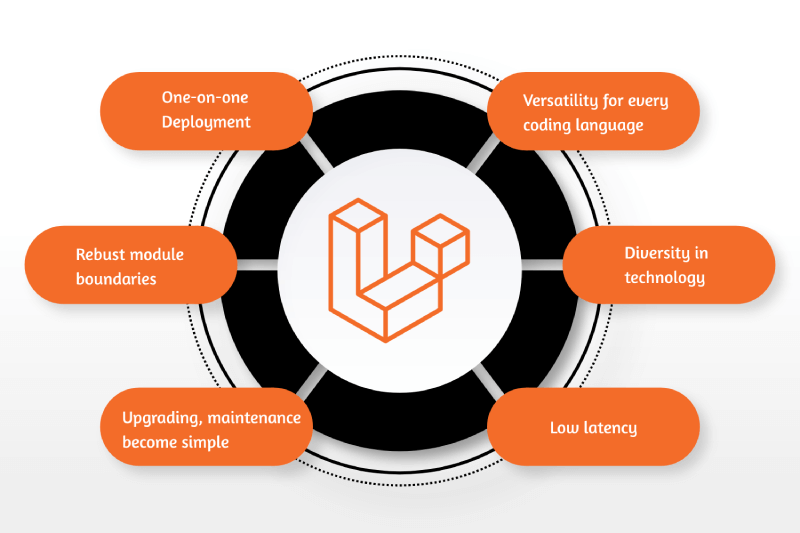
The shift from monoliths to microservices is not just a trend—it’s a necessity for scaling modern apps. With growing user bases, complex integrations, and 24/7 global access, microservices bring several advantages:
- Independent scaling — Scale only the services under pressure (payments, search, reporting).
- Resilience — One service failing doesn’t take down the whole system.
- Faster deployments — Teams can update, test, and ship features independently.
- Cloud readiness — Perfect fit for containerized and serverless environments.

2. Laravel’s Scalability Strengths and Weaknesses
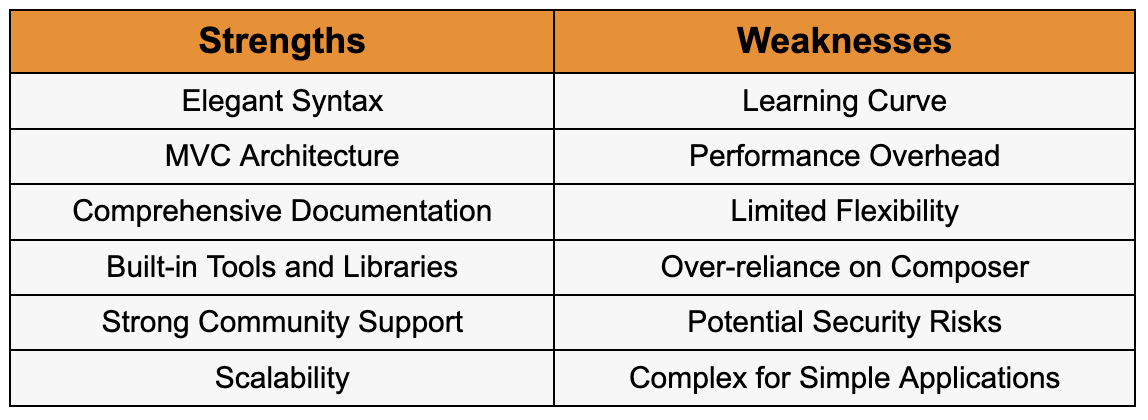
Laravel is often underestimated when it comes to scalability. According to a Medium article on Laravel scalability in 2025, the framework continues to evolve with better support for microservices and cloud infrastructure. Some of its strengths include:
- Eloquent ORM and migrations for structured database management.
- Built-in support for queues, caching, and job scheduling.
- Cloud tools like Forge, Vapor, and Horizon for seamless scaling.
That said, PHP comes with runtime overhead, and Laravel isn’t ideal for CPU-heavy, ultra-concurrent workloads. This is where Go shines.
3. Go’s Edge in Microservices Development
Go, or Golang, is built from the ground up for concurrency and performance. It offers:
- Lightweight concurrency with goroutines and channels.
- Compiled binaries that run faster and use fewer resources than interpreted code.
- Ideal for real-time systems like streaming, chat, IoT, and financial platforms.
- Simple deployment: one binary, easy to containerize, perfect for Kubernetes clusters.
Go’s strength lies in building microservices that need to handle thousands of simultaneous requests without breaking a sweat.
4. Hybrid Architecture: Go + Laravel
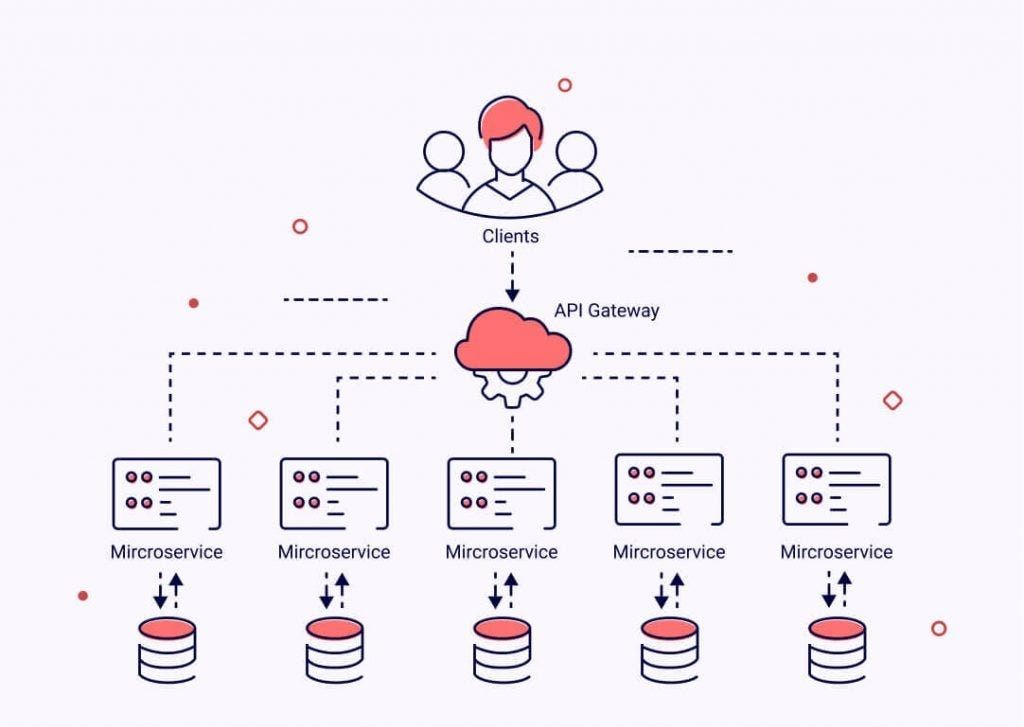
So why not choose one? Because each brings unique value. The most powerful architectures in 2025 often blend the two:
- Laravel for business logic, user management, admin dashboards, and feature-rich workflows.
- Go for performance-critical services: streaming, WebSockets, heavy computations, real-time data pipelines.
- Service-to-service communication via REST, gRPC, or message brokers (e.g. Kafka, RabbitMQ).
- Deployment on Kubernetes or serverless platforms for elastic scaling.
This approach lets teams use Laravel’s productivity where it shines, while offloading bottlenecks to Go services.

5. Best Practices for Scalability
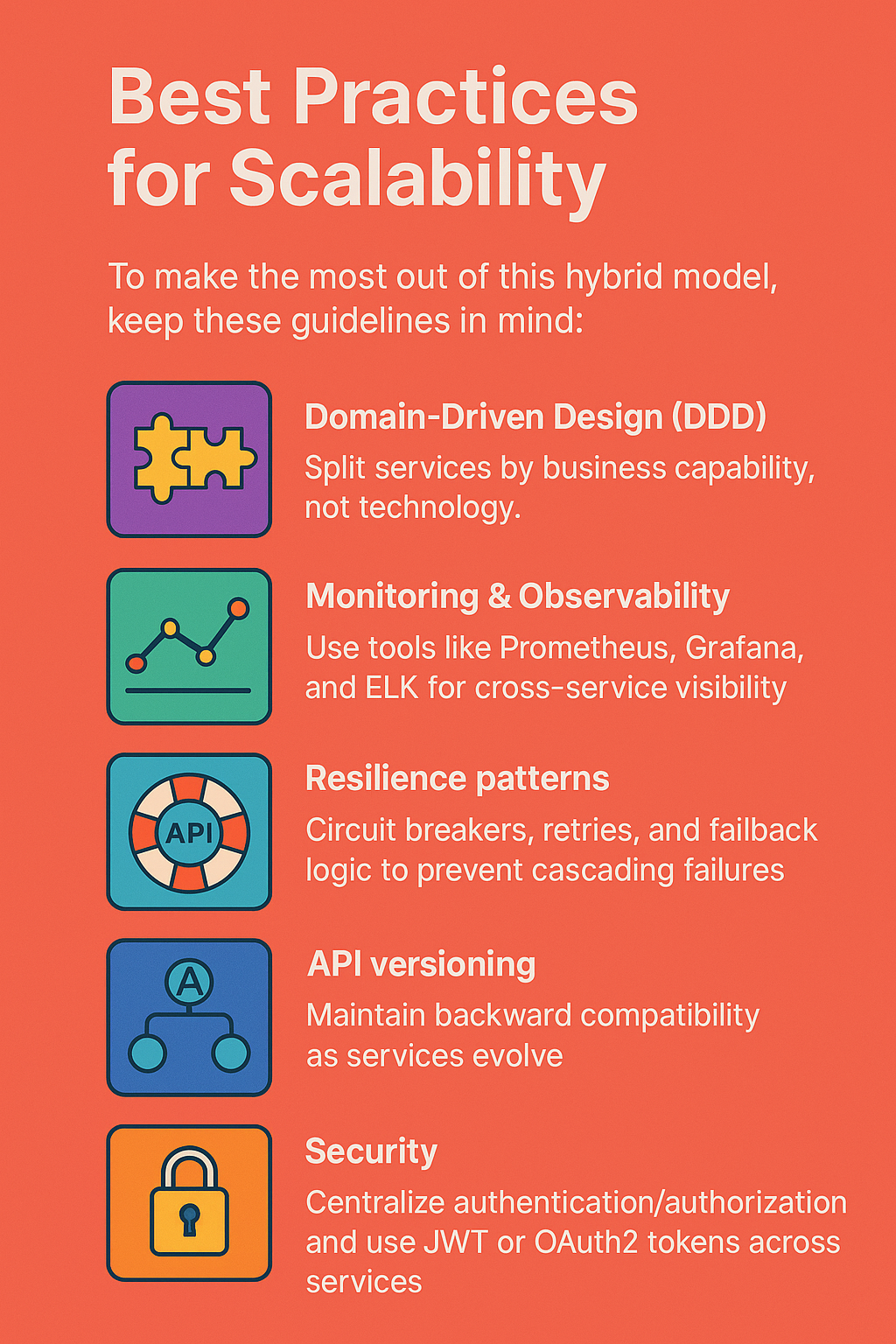
To make the most out of this hybrid model, keep these guidelines in mind:
- Domain-Driven Design (DDD) — Split services by business capability, not technology.
- Monitoring & Observability — Use tools like Prometheus, Grafana, and ELK for cross-service visibility.
- Resilience patterns — Circuit breakers, retries, and fallback logic to prevent cascading failures.
- API versioning — Maintain backward compatibility as services evolve.
- Security — Centralize authentication/authorization and use JWT or OAuth2 tokens across services.
6. Example Use Case: E-Commerce Platform
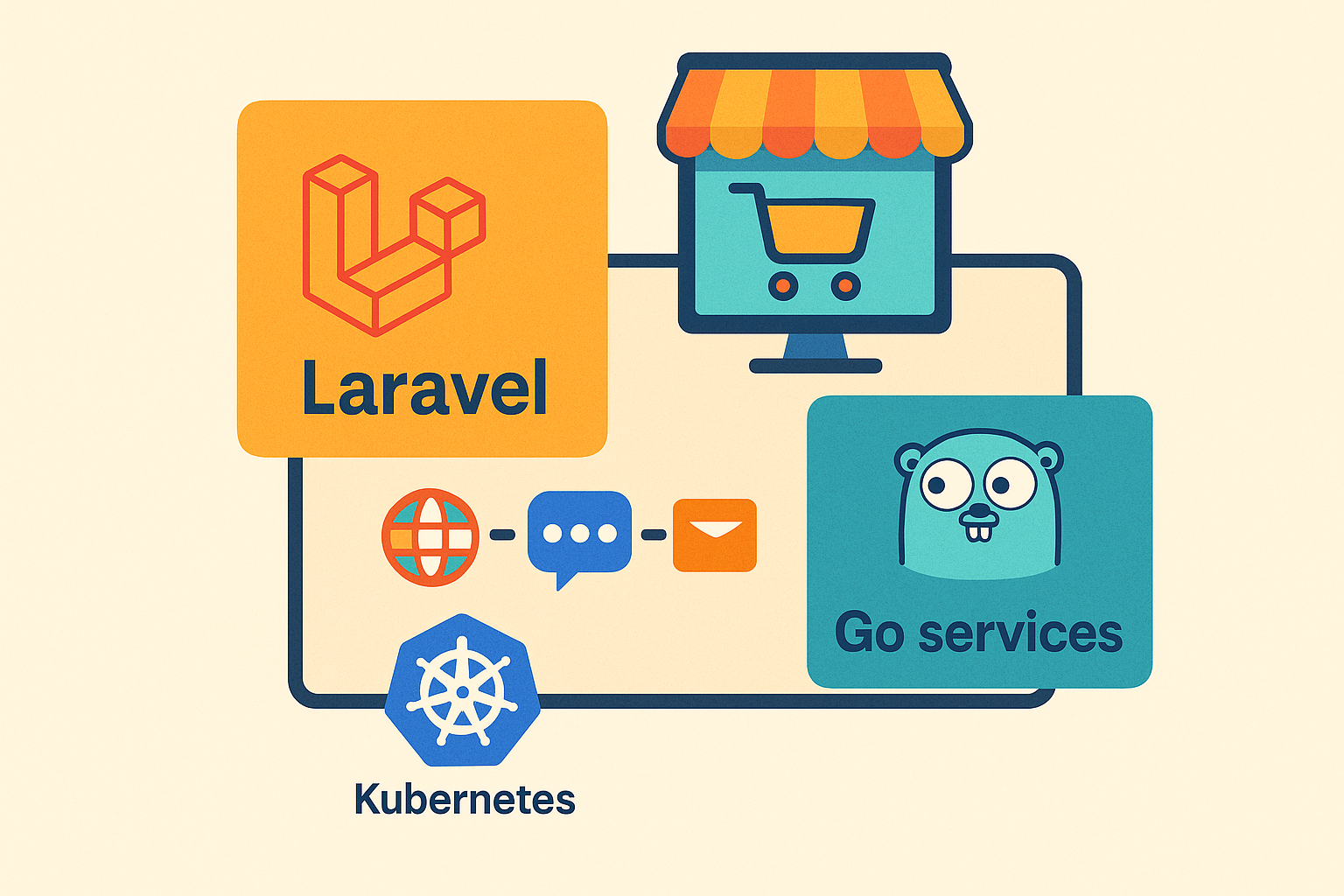
Imagine a SaaS e-commerce solution built with Laravel and Go:
- Laravel manages user accounts, product catalogs, orders, and admin tools.
- Go services handle inventory synchronization, real-time notifications, and transaction streaming.
- Both connect through APIs and message queues, deployed on Kubernetes with horizontal auto-scaling.
The result: a system that’s feature-rich yet fast, scalable, and resilient — able to handle peak shopping seasons without downtime.
Conclusion
Laravel and Go don’t compete—they complement each other. Laravel accelerates development with its rich ecosystem, while Go delivers the raw performance needed for the most demanding services. In 2025, businesses that embrace a hybrid microservices strategy with Go and Laravel will be best positioned to scale confidently and efficiently.
Book your free consultation today to design a scalable Go + Laravel microservices architecture tailored to your business.